
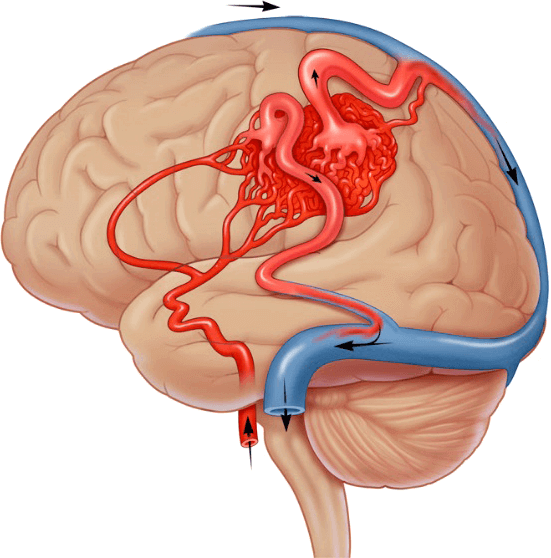

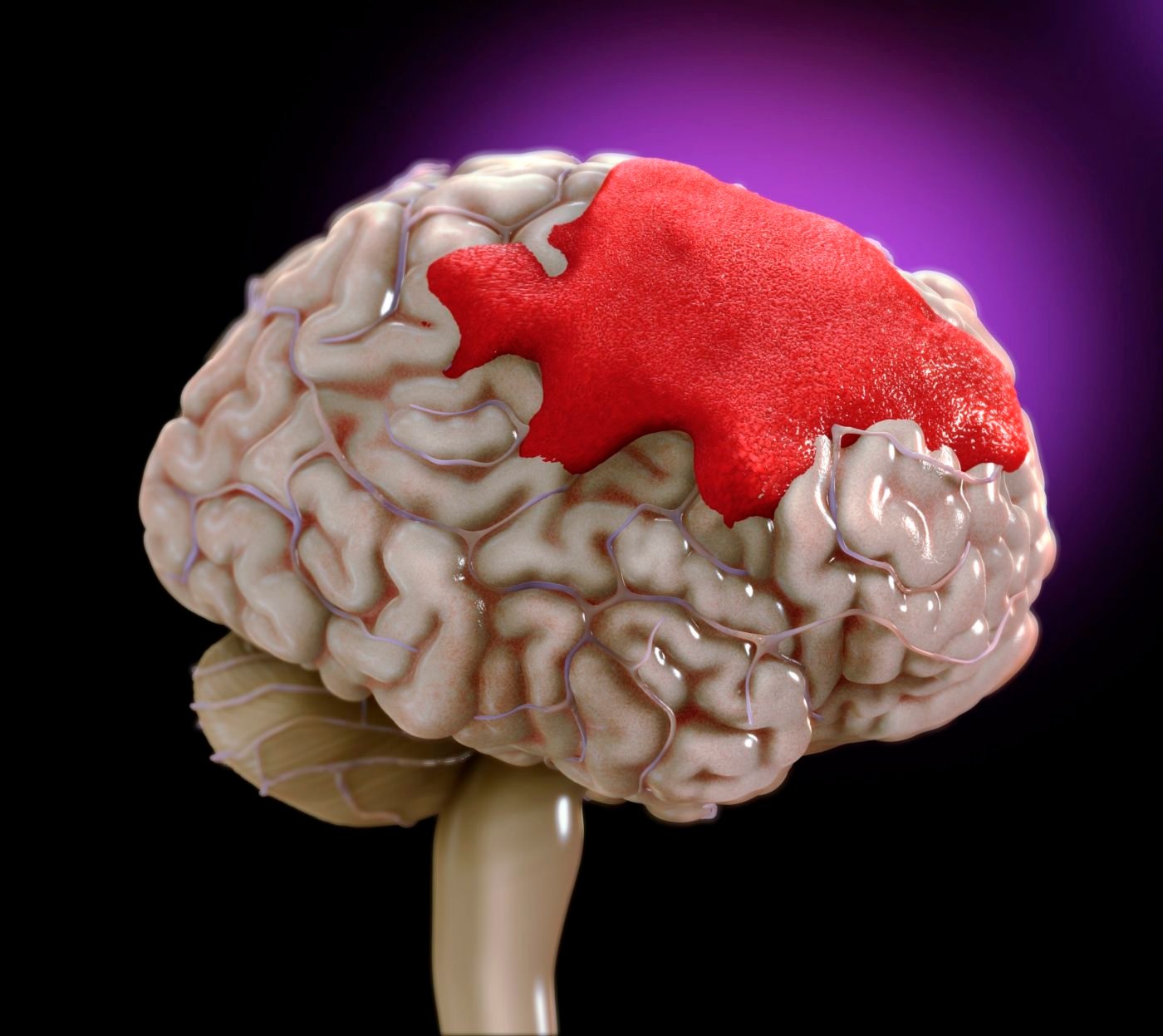



Back pain, neck pain, slipped discs, spinal stenosis, and other spine disorders can significantly impact daily life, mobility, and overall well-being. While traditional spine surgeries often involve larger incisions and longer recovery periods, Minimally Invasive Spine Surgery (MISS) offers a modern approach with smaller incisions, reduced tissue damage, and faster healing.
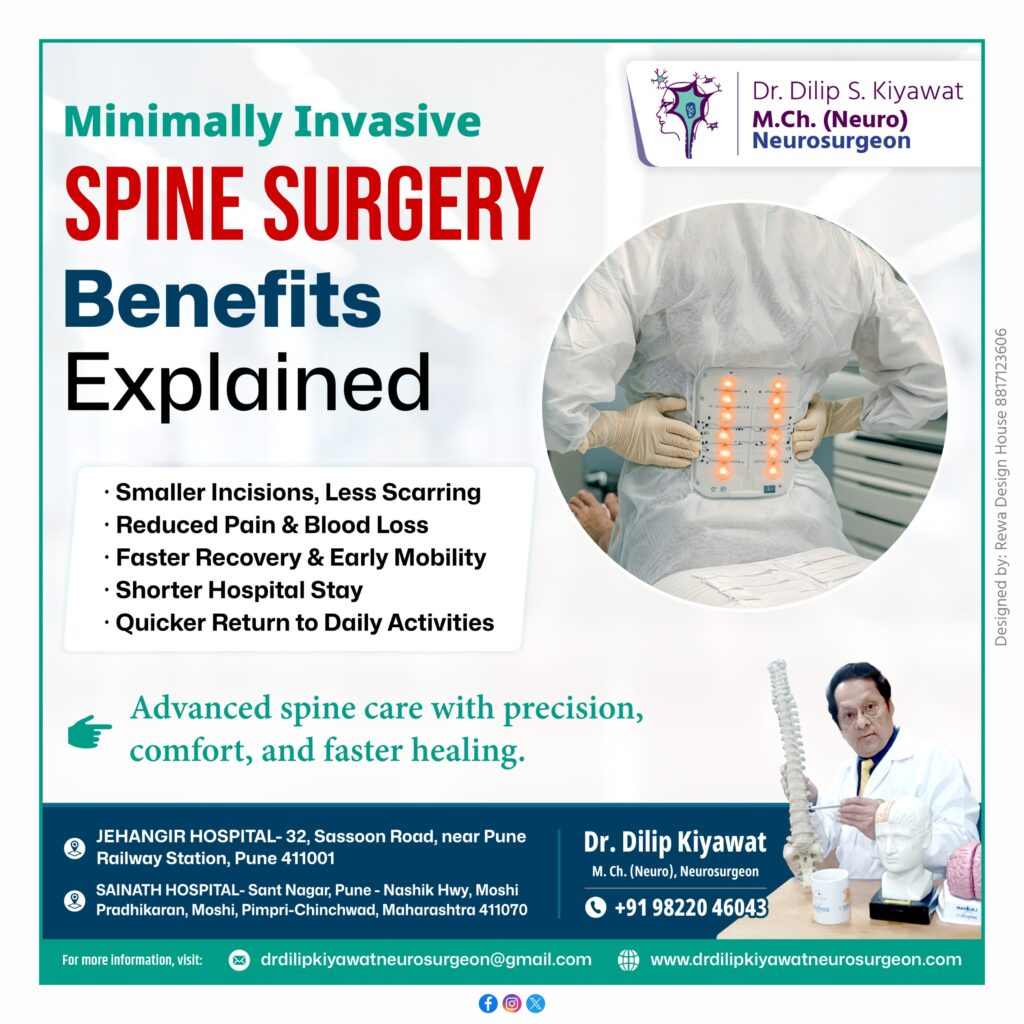
If you are looking for expert Minimally Invasive Spine Surgery in Pune, Dr. Dilip S. Kiyawat (M.Ch. Neuro) provides advanced spine care using state-of-the-art techniques designed to improve patient outcomes and recovery.
What is Minimally Invasive Spine Surgery?
Minimally Invasive Spine Surgery (MISS) is an advanced surgical technique that uses specialized instruments and imaging technology to access the spine through small incisions instead of large surgical openings.
The goal is to treat spinal conditions while minimizing damage to surrounding muscles and tissues.
Compared to traditional spine surgery, MISS often results in:
Smaller incisions
Less tissue trauma
Reduced postoperative pain
Faster recovery
Shorter hospital stay
Conditions Treated with Minimally Invasive Spine Surgery
MISS may be recommended for various spinal disorders, including:
Herniated Disc (Slipped Disc)
A damaged disc can compress nearby nerves, causing pain, numbness, and weakness.
Spinal Stenosis
Narrowing of the spinal canal can put pressure on nerves and lead to back and leg pain.
Degenerative Disc Disease
Age-related wear and tear can cause chronic discomfort and restricted mobility.
Sciatica
Compression of the sciatic nerve may cause pain radiating down the leg.
Spinal Instability
Certain spinal conditions may require stabilization procedures.
Vertebral Fractures
Some fractures can be treated using minimally invasive techniques.
Benefits of Minimally Invasive Spine Surgery
Smaller Incisions and Less Scarring
Smaller surgical cuts lead to reduced scarring and improved cosmetic outcomes.
Reduced Pain and Blood Loss
Because there is less disruption of muscles and soft tissues, patients often experience less postoperative pain and blood loss.
Faster Recovery
Patients generally recover more quickly and can return to normal activities sooner.
Shorter Hospital Stay
Many minimally invasive procedures require shorter hospitalization compared to traditional surgery.
Early Mobility
Patients can often begin walking and moving earlier during recovery.
Quicker Return to Daily Activities
Work, household activities, and exercise may be resumed sooner based on medical advice.
Signs You Should Consult a Spine Specialist
Seek medical evaluation if you experience:
Persistent back pain
Chronic neck pain
Pain radiating to arms or legs
Numbness or tingling sensations
Muscle weakness
Difficulty walking
Loss of balance
Symptoms that do not improve with conservative treatment
Early diagnosis can prevent complications and improve treatment outcomes.
How is Minimally Invasive Spine Surgery Performed?
The procedure typically involves:
Detailed clinical evaluation and imaging studies.
Identification of the affected spinal area.
Small surgical incisions.
Use of specialized instruments and imaging guidance.
Precise treatment of the spinal problem while preserving surrounding tissues.
The exact procedure varies depending on the patient’s condition and treatment requirements.
Recovery After Spine Surgery
Recovery depends on the type of procedure performed and the patient’s overall health.
Recovery Recommendations:
Follow postoperative instructions carefully.
Attend scheduled follow-up visits.
Participate in rehabilitation if recommended.
Avoid excessive strain during healing.
Maintain proper posture and spine care.
Why Choose Dr. Dilip S. Kiyawat?
Experienced Neurosurgeon
Dr. Dilip S. Kiyawat, M.Ch. (Neuro) is an experienced neurosurgeon specializing in advanced spine and neurological care.
Advanced Surgical Techniques
Use of modern minimally invasive procedures to improve precision and patient outcomes.
Personalized Treatment Plans
Every patient receives an individualized treatment approach based on their condition and health goals.
Comprehensive Spine Care
From diagnosis to surgery and rehabilitation, patients receive complete spine management under expert supervision.
Tips for Maintaining a Healthy Spine
Maintain proper posture.
Exercise regularly.
Strengthen core muscles.
Avoid prolonged sitting.
Lift heavy objects correctly.
Maintain a healthy body weight.
Seek medical attention for persistent pain.
Book Your Spine Consultation Today
If you are suffering from chronic back pain, neck pain, sciatica, or other spinal conditions, consult Dr. Dilip S. Kiyawat, a leading neurosurgeon in Pune specializing in Minimally Invasive Spine Surgery. Advanced surgical techniques can help reduce pain, restore mobility, and support a faster return to everyday life.