


Brain tumors are among the most serious neurological conditions, affecting the brain’s normal functioning and potentially leading to life-threatening complications if left untreated. One of the most important factors in successful treatment is early diagnosis. Detecting a brain tumor at an early stage can significantly improve treatment outcomes, reduce complications, and enhance a patient’s quality of life.
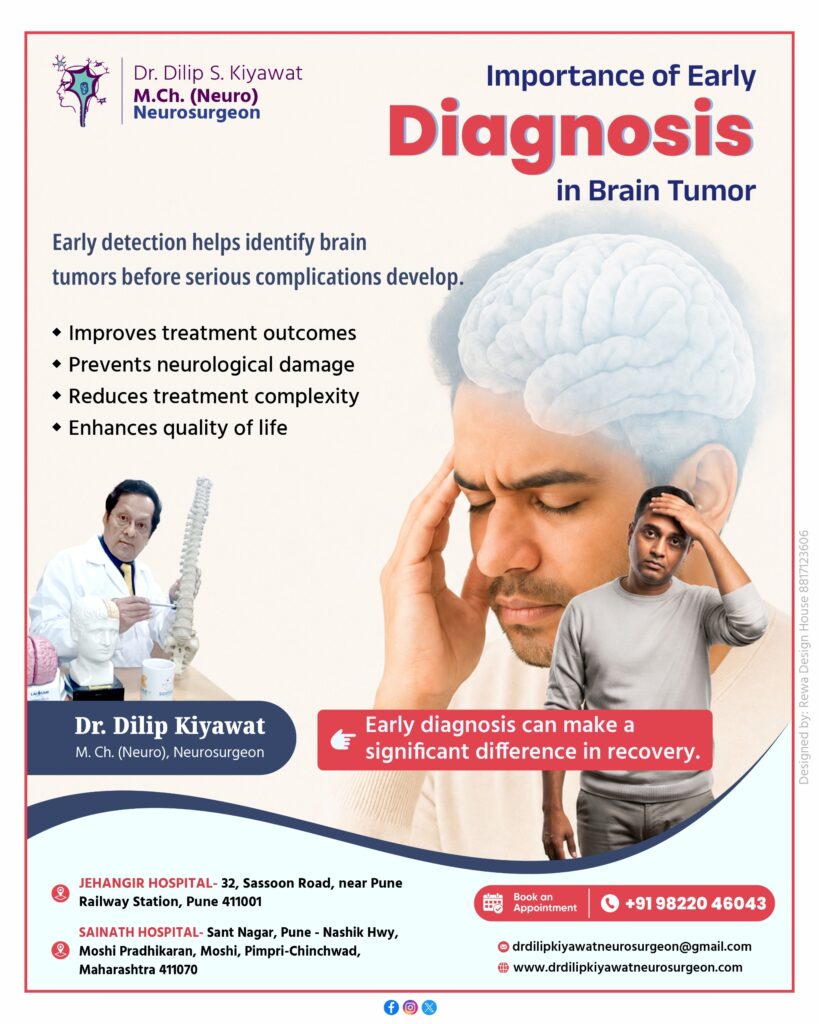
Dr. Dilip S. Kiyawat, M.Ch. (Neuro), an experienced Neurosurgeon in Pune, emphasizes the importance of recognizing symptoms early and seeking timely medical attention to ensure the best possible recovery.
What is a Brain Tumor?
A brain tumor is an abnormal growth of cells within the brain or surrounding tissues. Tumors can be:
1. Benign Brain Tumors
Non-cancerous growths
Usually grow slowly
May still cause serious problems due to pressure on brain structures
2. Malignant Brain Tumors
Cancerous growths
Can grow rapidly and spread to nearby tissues
Require immediate medical intervention
Brain tumors can occur at any age and may develop in different parts of the brain, affecting various functions such as movement, speech, memory, vision, and coordination.
Why is Early Diagnosis Important?
Early detection of a brain tumor can make a significant difference in treatment success and overall prognosis.
1. Improves Treatment Outcomes
When diagnosed early, brain tumors are often smaller and easier to manage. Treatment options such as surgery, radiation therapy, or chemotherapy may be more effective before the tumor grows larger or affects critical brain areas.
2. Prevents Neurological Damage
As a tumor grows, it can put pressure on surrounding brain tissue, leading to permanent neurological damage. Early diagnosis helps prevent complications such as:
Memory problems
Speech difficulties
Weakness in limbs
Loss of coordination
Vision impairment
3. Reduces Treatment Complexity
Smaller tumors generally require less extensive treatment. Early intervention may reduce:
Surgical risks
Recovery time
Need for aggressive therapies
Long-term complications
4. Enhances Quality of Life
Patients diagnosed early often experience better symptom control and can maintain normal daily activities for longer periods. Early treatment contributes to improved physical, emotional, and mental well-being.
Common Symptoms of a Brain Tumor
The symptoms vary depending on the tumor’s size, location, and growth rate. Some warning signs include:
Persistent Headaches
Frequent headaches
Headaches that worsen over time
Morning headaches
Seizures
Sudden seizures without previous history
Unexplained loss of consciousness
Blurred vision
Vision Problems
Double vision
Loss of peripheral vision
Balance and Coordination Issues
Difficulty walking
Loss of balance
Frequent falls
Cognitive Changes
Memory loss
Difficulty concentrating
Personality changes
Speech and Hearing Problems
Slurred speech
Difficulty understanding language
Hearing loss
Nausea and Vomiting
Especially in the morning
Associated with increased pressure inside the skull
Weakness or Numbness
Weakness in arms or legs
Facial numbness
One-sided body weakness
If any of these symptoms persist, immediate consultation with a neurosurgeon is recommended.
Risk Factors for Brain Tumors
Although the exact cause of most brain tumors remains unknown, certain factors may increase risk:
Family history of brain tumors
Exposure to radiation
Genetic disorders
Increasing age
Previous cancer history
Regular health checkups and awareness of symptoms can help in early detection.
Diagnostic Methods for Brain Tumors
Modern medical technology allows accurate diagnosis and treatment planning.
Neurological Examination
The doctor evaluates:
Reflexes
Muscle strength
Coordination
Vision and hearing
Mental status
MRI Scan
Magnetic Resonance Imaging (MRI) provides detailed images of brain structures and is one of the most effective diagnostic tools.
CT Scan
Computed Tomography (CT) scans help identify abnormalities and assess tumor size.
Biopsy
A tissue sample may be collected to determine whether the tumor is benign or malignant.
Advanced Neuroimaging
Advanced imaging techniques help evaluate tumor characteristics and assist in surgical planning.
Treatment Options
Treatment depends on the tumor type, size, location, and overall health of the patient.
Brain Tumor Surgery
Surgical removal is often the primary treatment when possible.
Radiation Therapy
Uses high-energy radiation to destroy tumor cells.
Chemotherapy
Medications are used to target and kill cancer cells.
Targeted Therapy
Advanced treatments focus on specific molecular changes within tumor cells.
Rehabilitation Services
Patients may benefit from:
Physiotherapy
Speech therapy
Occupational therapy
How Early Diagnosis Improves Recovery
Patients diagnosed at an early stage often experience:
Better survival rates
Improved neurological function
Reduced treatment-related complications
Faster recovery after treatment
Better long-term quality of life
As highlighted by Dr. Dilip Kiyawat, early diagnosis can truly make a significant difference in recovery and future health outcomes.
When Should You See a Neurosurgeon?
Consult a neurosurgeon immediately if you experience:
Persistent or worsening headaches
Unexplained seizures
Vision changes
Memory or behavioral changes
Weakness or numbness
Balance problems
Prompt evaluation can help identify underlying neurological conditions before they become severe.
Conclusion
Brain tumors can be challenging, but early diagnosis offers the best chance for successful treatment and recovery. Recognizing warning signs and seeking expert medical care without delay can prevent serious neurological complications and improve overall outcomes. If you or a loved one experiences symptoms suggestive of a brain tumor, consult an experienced neurosurgeon like Dr. Dilip S. Kiyawat for timely evaluation and expert care.