



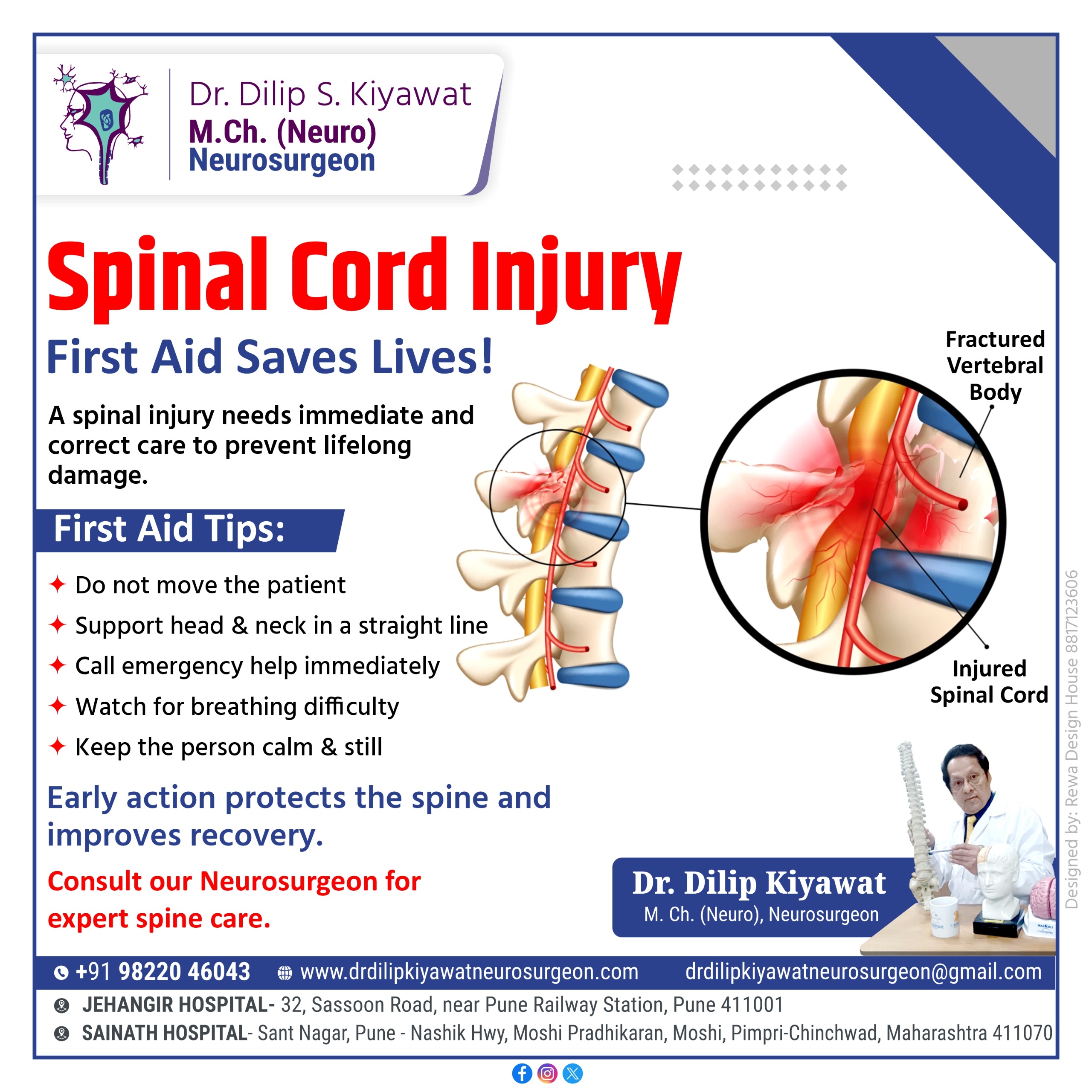
A spinal cord injury (SCI) is one of the most serious medical emergencies that can lead to long-term disability if not treated on time. The spinal cord controls movement, sensation, reflexes, and essential body functions. Any damage to this delicate structure requires immediate and proper first aid to prevent permanent complications.
At such critical moments, quick awareness and timely medical intervention can help save a person’s mobility—and even their life.
This comprehensive guide explains spinal cord injury, first aid tips, treatment options, and why consulting an expert neurosurgeon like Dr. Dilip S. Kiyawat (M.Ch. Neuro) is crucial for recovery.
What Is a Spinal Cord Injury?
A spinal cord injury occurs when the spinal cord or surrounding structures—vertebrae, ligaments, or discs—are damaged due to trauma. This can disrupt communication between the brain and the body, affecting strength, sensation, and essential functions.
Common causes include:
Road or bike accidents
Falls from height
Sports injuries
Physical assault
Workplace accidents
Severe twisting of the back or neck
Depending on severity, SCI may be temporary or permanent.
Signs & Symptoms of Spinal Cord Injury
Recognizing symptoms early helps prevent further harm. Some common signs include:
Severe back or neck pain
Loss of movement or weakness
Tingling or numbness in hands, legs, or feet
Difficulty breathing
Loss of bladder or bowel control
Unusual head or neck position
Loss of balance
If any of these signs appear after trauma, consider it a medical emergency
First Aid for Spinal Cord Injury – What You MUST Do
1. Do Not Move the Patient
Movement can worsen spinal damage. Keep the patient in the same position.
2. Support the Head & Neck
Keep the head, neck, and spine in a straight line. Avoid twisting.
3. Call Emergency Help Immediately
Time is critical. Contact emergency services without delay.
4. Watch for Breathing Difficulty
If the person is struggling to breathe, ensure the airway remains open—but without moving the neck.
5. Keep the Person Calm & Still
Reassure them and stop them from trying to stand or move.
Why First Aid Matters So Much
Early action:
Protects the spinal cord
Reduces risk of lifelong disability
Improves recovery chances
Prevents further nerve damage
Medical Treatment for Spinal Cord Injury
Treatment depends on the location and severity of the damage.
1. Emergency Stabilization
Includes keeping the spine aligned and preventing further injury.
2. Imaging Tests
MRI, CT scan, and X-ray to identify the exact injury.
3. Surgery
To remove bone fragments, repair fractures, stabilize the spine, or relieve pressure on the spinal cord.
4. Rehabilitation
Long-term physiotherapy, occupational therapy, and mobility training help patients regain function and independence.
Early diagnosis and expert neurosurgical care significantly improve outcomes.
Expert Spine Care by Dr. Dilip S. Kiyawat (M.Ch. Neuro)
Dr. Dilip Kiyawat is a highly experienced neurosurgeon specializing in spine and spinal cord injuries.
He provides:
Advanced diagnosis
Precision spine surgery
Trauma management
Minimally invasive procedures
Post-surgery recovery support
Patients across Pune trust him for his excellence, expertise, and compassionate care.
Why Early Treatment Is Important
A spinal cord injury is a time-sensitive medical emergency.
With the right first aid and expert neurosurgical care, patients can:
Avoid irreversible nerve damage
Recover mobility
Prevent long-term paralysis
Improve quality of life
Remember: Early action protects the spine and improves recovery.